
When Usain Bolt set the 100m world record in a time of 9.58 seconds he took 41 steps. 41 powerful, coordinated, blisteringly fast steps. Acts of this nature rely on the phosphagen system, the energy system that dominates during very short, explosive efforts such as sprinting, jumping, heavy lifting and throwing.
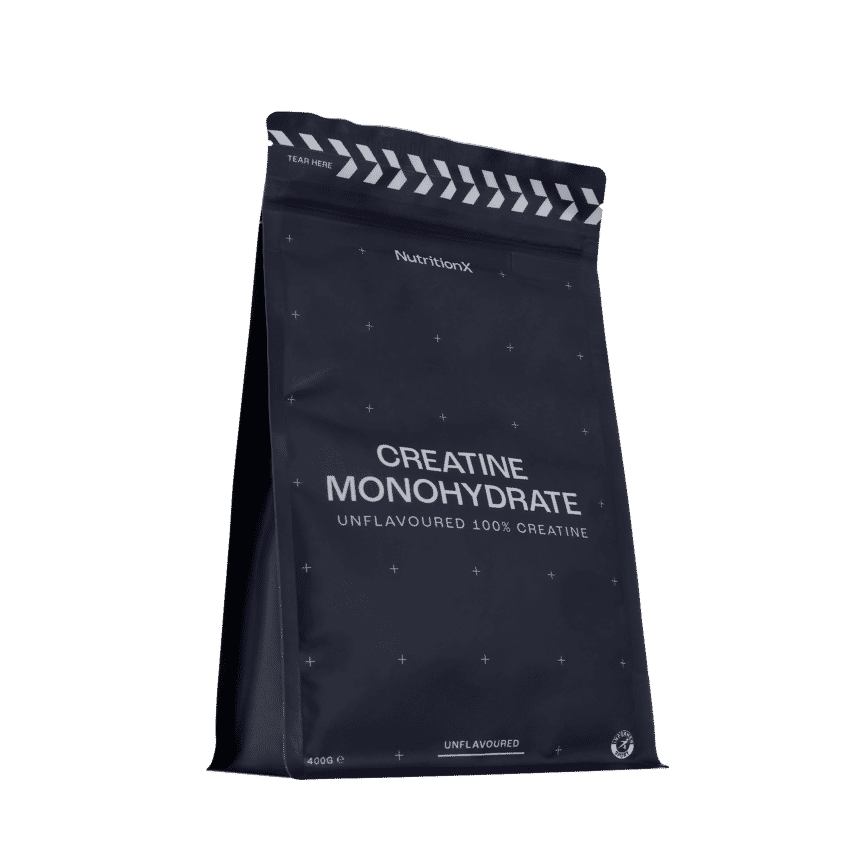
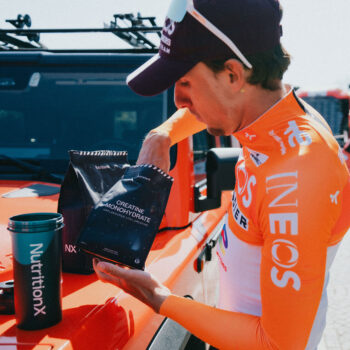
This is where creatine supplementation has found its primary residence. Creatine monohydrate supplementation supports the phosphagen energy system by raising total creatine and phosphocreatine (PCr) stores in the muscle, allowing a rapid resynthesis of the energy currency ATP, maintaining its availability when demand spikes. This can also be realised between repeated high-intensity efforts such as repeated sprints, lifting sets in the gym and any of these forms of near-maximal short-duration work.
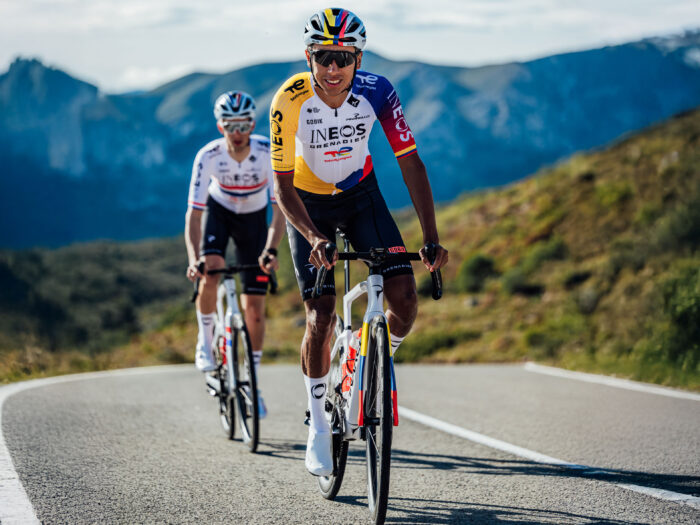
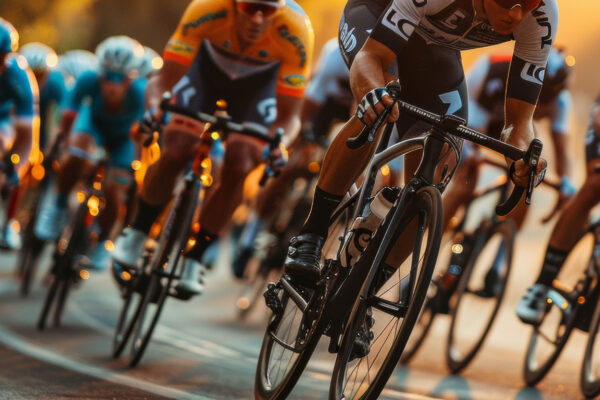
If we then consider the demands of those 41 explosive steps and compare them to a stage of a grand tour cycling event where a rider may push on the pedals creating more than 25,000 revolutions, they are supported in very different ways. A rider will rely on an efficient aerobic system to glide along the tarmac and occasional cobbles. Not every revolution is the same, so where are the stages won? Where are the edges found that separate out the podium finishers each day? Those key race-winning moments are the attacks, the hard surges, the crucial climbs and repeated changes of pace throughout a day in the saddle, and these rely on important contributions from that same phosphagen system Bolt used in his 41 steps into history.
Creatine supplementation has been generating significant research interest recently, touted as the cure-all for everything - from brain health to sleep deprivation. Whilst some of these are exciting emerging areas of research, the evidence is there to support creatine use in cyclists when we think about what creates winning moments.
1. Strength Training for Cyclists: How Creatine Amplifies Your Off-Season Gains
Heavy lower body strength training should be a feature of any cyclist's calendar. It may not feature heavily during race periods, but especially in the off-season, strength training significantly improves cycling efficiency, anaerobic power and overall performance in time trials (TT) and time to exhaustion tests (TTE) (1). Accompanying gains in lower-body lean mass can enhance maximum mean power outputs by ~4-9% as well (2). For a cyclist, that translates directly to a higher functional threshold power (FTP) and a greater capacity to produce watts when it matters most.
The use of creatine supplementation for strength and muscle gains has been well studied, and by grouping these works, the consensus is that it strongly supports greater gains in strength and small but meaningful increases in muscle mass when compared with lifting alone (3,4,5). This is achieved with that enhancement of the phosphocreatine stores in the muscle, supporting more work to be completed each set and better recovery between sets. So, over the course of a session, there is a greater stimulus for those long-term adaptations to training. For cyclists putting in heavy squat and leg press sessions through November and December, this means more quality reps, session after session.
"More reps, better sets and more total work done leads to greater strength improvements, leading to greater efficiency and power on the bike."

2. Maintaining Cycling Strength Gains Through Race Season
Once race season starts, the gym takes a back seat to miles, intervals and racing. Continued supplementation with creatine may support this maintenance of muscle mass and strength by preserving training quality and promoting those adaptations, even when volume of work is lower (6,7), so the watts you built over winter don't quietly disappear by July.
This may be especially important in masters cyclists, where enhancing the phosphocreatine pool significantly increases lean muscle and strength gains (8) and appears protective if this is continued during stressful or reduced-quality training periods (9). For those racing in masters categories, creatine may be one of the more impactful legal interventions available.
3. Creatine and Cycling Recovery: Back Up Hard Efforts Day After Day
The ability to accumulate great sessions day on day, and then in-season, back up performances on consecutive race days, relies on effective recovery. 'Feeling' recovered is important, but crucially the ability to exert high levels of force again and again is the differentiator. For a stage racer or a rider targeting a multi-day sportive, creatine supplementation for recovery has been shown to reduce post-exercise muscle damage, soreness and reduce some of the inflammatory response to hard efforts. This leads to recovery; specifically of the ability to produce higher levels of force the day following really intense, repeated, damaging exercise (6). That ability to hit a steep climb at full gas on stage four, when your legs have already taken three days of punishment, could be the difference.
Another emerging area for creatine in cycling is the recovery of that 'fuel tank' in our muscles: our stores of carbohydrate as glycogen. Ingesting creatine (20g/day) alongside a really high carbohydrate intake after an exhaustive bout of work doubled the resynthesis of this glycogen fuel tank in muscles in the first 24 hours when compared with carbs alone. For a cyclist trying to back up a hard day in the mountains, or who has a criterium the morning after a road race, this rapid refuelling could be the difference between legs and no legs. This ability to refuel efficiently, especially when the challenge is backing up performances on repeated days, could make that sustained power up a steep climb to win a reality (10).
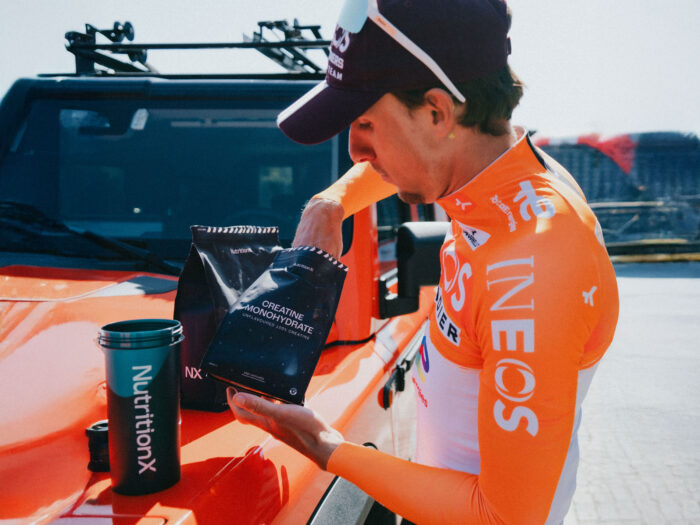
Does Creatine Cause Weight Gain in Cyclists?
One of the fears of creatine supplementation among cyclists is that extra bodyweight will hurt their watts per kilo due to extra water held within the muscle. Evidence shows this can be a rapid jump if a high-dose loading phase of 20-30g/day is taken for 5-7 days (11). However, if a low consistent 3-5g/day is taken, the increase in bodyweight (~0.7-0.9kg) appears to be lean muscle mass and leads to improved body composition overall (6). Given that lean muscle directly contributes to power output, the net effect on watts per kilo is likely neutral or positive for most cyclists. In female cyclists, the data available suggests this change in body weight may not be a significant concern at all (12).
Should Cyclists Take Creatine? The Bottom Line
To be clear: creatine supplementation will not directly improve VO2 max or aerobic endurance capacity, that is a different system. But great moments that win events can be enabled by maximising the systems that support them. Creatine will help you maximise strength training so your efficiency and power outputs are as high as possible: think higher FTP, better torque through the pedals on steep gradients. It will also support maintenance of those gains once you are into the competitive season. Between races it will enable a reduction in muscle damage and a return to maximal power outputs quickly. Finally, when a full tank of fuel is needed on repeated days, it may also enable that rapid regeneration alongside enough carbohydrate foods. Together you can see creatine shouldn't be neglected; it can complement all of those elements which accumulate in the decisive moments of a race: the final climb, the sprint from the breakaway, or simply having enough in the tank to push through the last hour of a grand fondo.
Key Takeaways: Creatine for Cyclists
- 3-5g per day consistently will raise muscle creatine pool and limit rapid jumps in body weight, important for cyclists mindful of watts per kilo.
- 20g/day alongside high carbohydrate intakes in recovery from maximal exhausting bouts may help maximise glycogen resynthesis, ideal for multi-day stage races or back-to-back events.
- Use consistently alongside a structured resistance training programme through the off-season to enhance cycling efficiency and peak power.
- No reason to stop in-season, maintaining muscle and strength through race season can be enhanced even when gym time is limited.
- If you are a Masters cyclist, this intervention could have an even more meaningful impact on your power, strength and race performance.
Frequently Asked Questions: Creatine for Cyclists
Should cyclists take creatine?
Yes. Whilst creatine does not directly improve VO2 max or aerobic capacity, it supports the explosive, high-intensity efforts that decide races, attacks, summit finishes, criterium sprints and repeated changes of pace. It also amplifies off-season strength training adaptations and accelerates recovery between hard training blocks or consecutive race days.
Does creatine cause weight gain in cyclists?
At a daily maintenance dose of 3-5g, any bodyweight increase (~0.7-0.9kg) is typically lean muscle mass. Since lean muscle contributes to power output, the effect on watts per kilo is likely neutral or positive. High-dose loading phases of 20-30g/day may cause temporary water retention and are not recommended for cyclists in race season.
What is the best creatine dose for cyclists?
For most cyclists, 3-5g of creatine monohydrate per day taken consistently is the most practical approach. During heavy training blocks or recovery from exhaustive stage racing, 20g/day for 24-48 hours alongside a high carbohydrate intake may accelerate glycogen resynthesis. Avoid high-dose loading phases during race season if bodyweight is a concern.
When should cyclists take creatine, off-season or year-round?
Year-round. Off-season: to maximise strength training adaptations during heavy gym work. In-season: to maintain those strength and muscle gains when gym frequency drops, and to support recovery between races. Consistency matters more than timing, take 3-5g daily regardless of training phase.
Does creatine help with cycling time trials or climbing?
Creatine does not directly improve sustained aerobic output, so its impact on a long flat time trial is indirect. However, it supports the higher-power efforts within a TT, the opening effort and surges over short rises, and the strength training that builds the FTP and power-to-weight ratio that underpins climbing and TT performance.

Written by
Nutrition X